
The Cost of Being Included: Hidden labour in women’s boxing
Written by Sarah Crews
‘Women’s boxing looks like progress. But progress often depends on work that remains unseen’.
Women’s boxing is widely framed as a success story. Olympic inclusion, soldout arenas, and headline bouts suggest longoverdue equality has arrived. These moments matter. But focusing on visibility alone risks missing what actually sustains the sport.
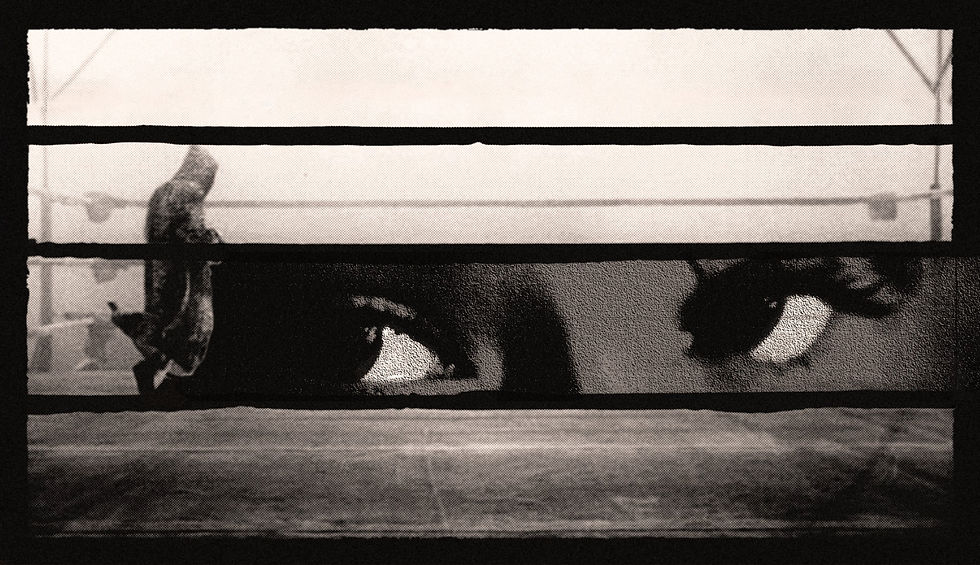
Research led by Dr Sarah Crews shows that women’s boxing is held together by hidden labour: logistical, emotional, and representational work that is essential to participation yet rarely recognised or rewarded. Drawing on interviews with retired and active boxers, coaches, and officials across the UK and USA, the research reveals how women are routinely required to compensate for fragile structures within boxing.
Much of this work takes the form of what Crews terms ‘Shadow Structure and Maintenance Work’. Women selffund travel, search for sparring partners, organise bouts, coach others, manage administration, and hold informal networks together when official systems fall short. These efforts are not framed as exceptional. They are understood as simply ‘what you have to do’ to remain in the sport.
Alongside this is what Crews calls ‘Affective and Aesthetic Labour’. Women must manage emotion, appearance, and visibility in ways that align with tightly gendered expectations. They are expected to be resilient but grateful, confident but nonthreatening, inspiring without being disruptive. Speaking openly about inequality often feels risky in a sport where opportunities are scarce and reputations fragile. Structural neglect is reframed as personal challenge, a dynamic illuminated by Lauren Berlant’s idea of cruel optimism.
At the same time, the research shows that women remain deeply committed to boxing because of what it offers. Participants consistently describe boxing as a source of belonging, community, confidence, clarity, and pride, and as a space where strength is shared rather than individualised. Through mentoring, informal networks, and everyday acts of care, women actively shape boxing cultures that are more inclusive, knowledgeable, and supportive than the structures surrounding them.
‘The more women step in to hold boxing together, the more the sport comes to rely on their invisible work’.
The visibility of women’s boxing is therefore not the end goal, but a starting point. While it rests on labour that often goes unseen, it also creates opportunities for change. Recognising this hidden work not only reveals persistent inequalities; it also highlights the care, solidarity, and commitment through which women are already building stronger futures for the sport.


Comments